Green infrastructure and the city
The uncontrolled construction that leads to urban sprawl increases ambient temperature and the amount of water flowing through storm drains. In open areas like County Lagoon, rainwater that is not absorbed by the ground carries sediment that sinks to the bottom of the lagoon, clouding its waters and harming aquatic life, including corals.
Green infrastructure helps us to mitigate these threats and protect lives and property from climate events.
Green infrastructure in the Laguna del Condado Estuarine Reserve

With this pilot project we aim to:
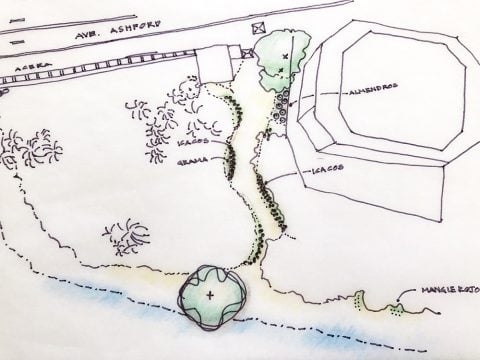
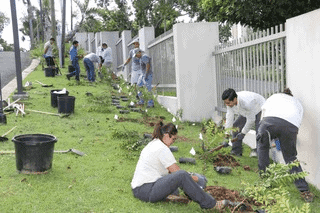
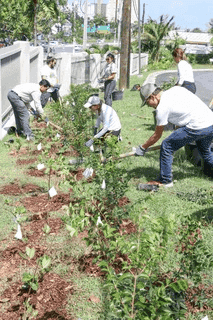
- Connect patches of red mangrove (Rhizophora mangle) on the east side of the mouth of the Lagoon that passes under Ashford Avenue to give them ecological continuity.

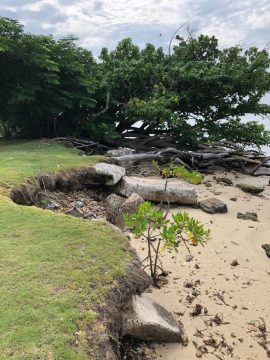
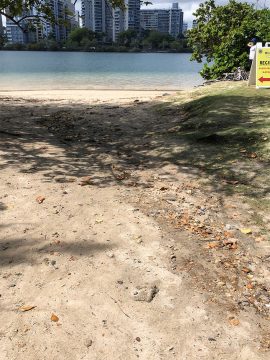
- Mitigate the erosion and compaction zone along the main pedestrian walkway from Ashford Avenue to the lagoon, as the particulate matter generated ends up at the bottom of the water body as sedimentation and affects aquatic life.


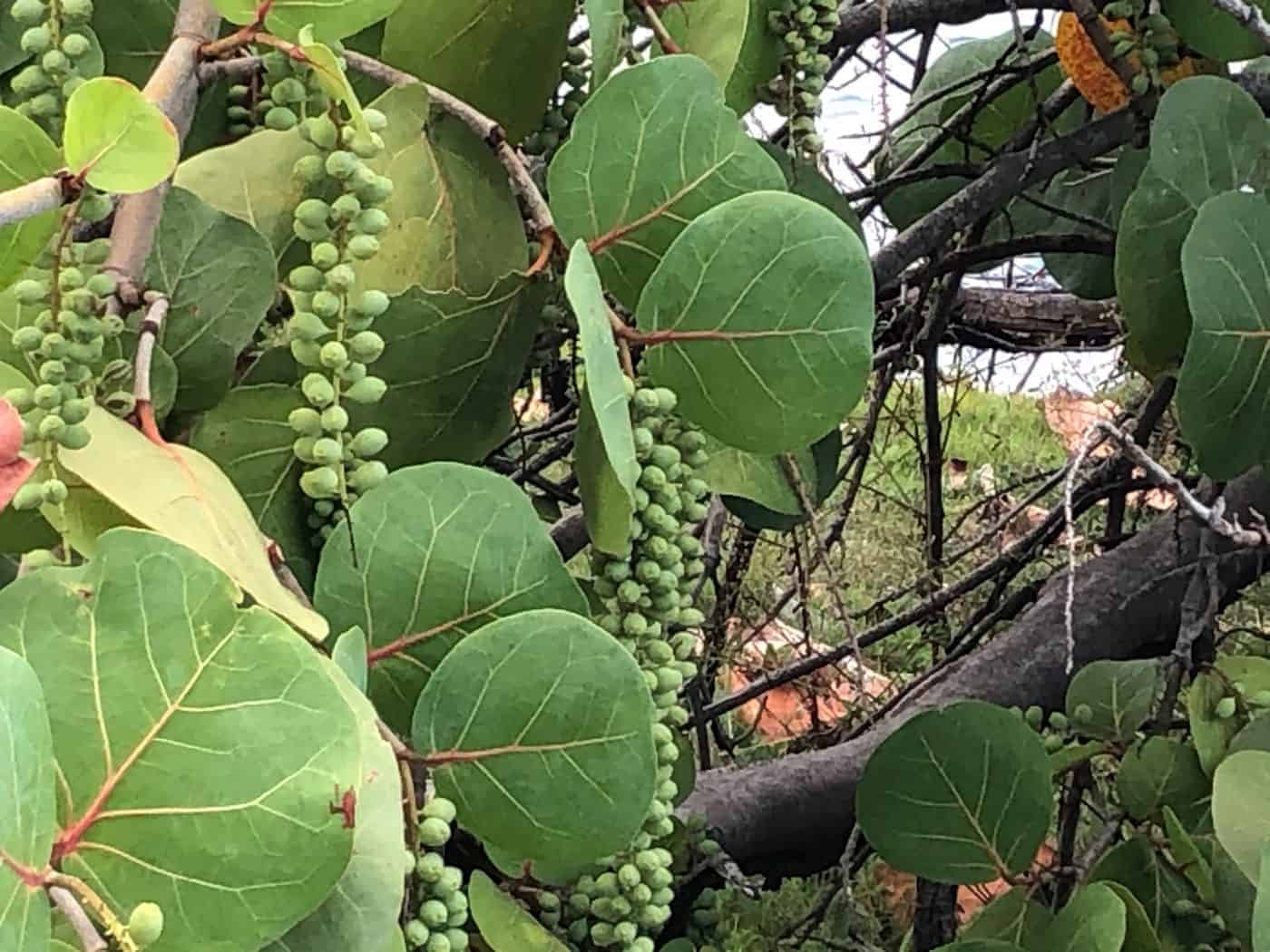
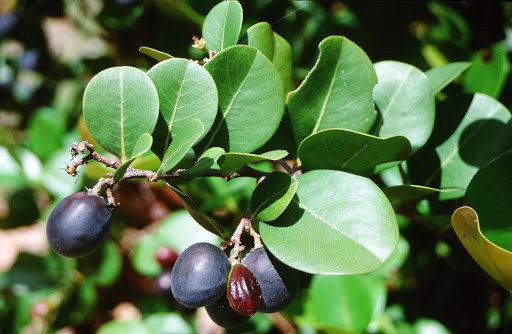
- Reforest with trees and shrubs, delimiting the pedestrian passage area with native plants: icacos (Chrysobalanus icaco) and sea grapes (Coccoloba uvifera).


- Providing a food source for birds and pollinators. Pollination and spontaneous regeneration of plants through germination of seeds that fall to the ground ensures the continuity of planting efforts in the lagoon.
- Strengthening biodiversity in the Laguna del Condado Estuarine Reserve.
Your collaboration is most important in our restoration efforts so that you can continue to enjoy County Lagoon
How you can do it:
- Walk in the designated areas to protect the green areas and allow the roots to grow.
- Keep your items away from the vegetation area so that the new planting can grow strong.
- If you are going to throw away the water from your bottle, water the plants and put the bottle in a trash can.
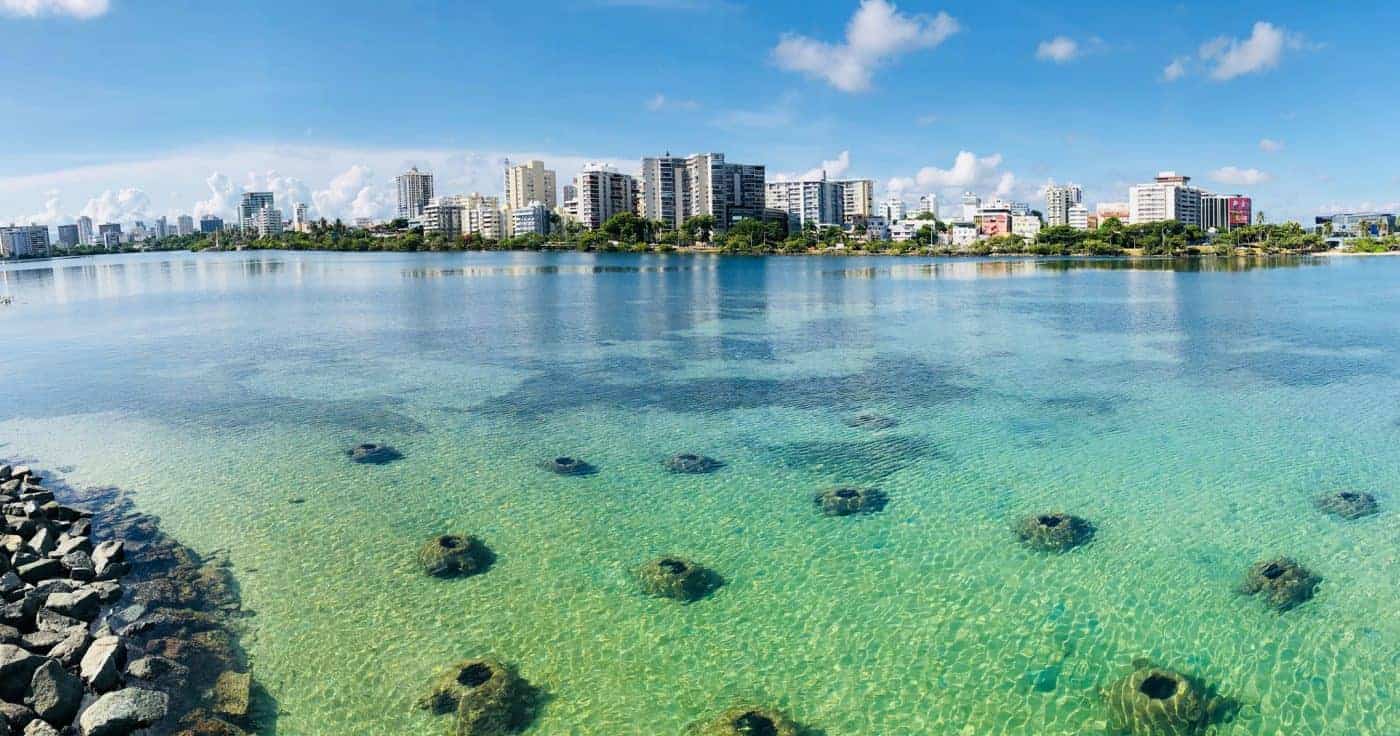
The shrubs will shelter and provide food for the new wildlife and take care of the lagoon's water, as well as our Artificial Reefs initiative (Learn more here).
Remember that all human activity has the potential to help or harm the estuarine system. If you want to learn about other ways to help your footprint benefit our ecosystems, we invite you to join the Community Water Network (access here).
Take care of the Laguna del Condado Estuarine Reserve! It belongs to everyone!
Other green infrastructure projects in ESTUARY
Development of the green infrastructure plan for the estuarine basin
With this plan, over the next few years, we will implement green infrastructure projects for stormwater management in the San Juan Bay Estuary watershed. Through collaboration and consultation with various stakeholders, we propose projects that benefit the ecosystem. We identify priority areas through participatory mapping and field visits.
Urban Forest Network
The main objective of creating an Urban Forest Network is to improve water quality and promote recreational, passive, scientific, and educational activities in urban forests, which are a critical part of the green infrastructure in the estuary basin. ESTUARIO encourages citizens to learn about these spaces, offering educational opportunities within them.
Urban forests help keep water clean, particularly in an urbanized watershed like the estuary basin, where the continued development of hard, impermeable surfaces has been the norm. In addition, urban forests provide habitat for wildlife, moderate temperatures, sequester carbon, and offer recreational opportunities, among many other benefits.
As part of this initiative, we created a "passport" for children to collect a stamp from each urban forest they visit. We also created a digital platform that you can access. here with details about the forests, how to care for them, and opportunities for them to participate in our activities.
The Urban Forest Network consists of:
- Julio Enrique Monagas National Park
- State Pine Nut Forest
- San Patricio State Forest
- Doña Inés Park
- Luis Muñoz Rivera Park
We support these forests by connecting young Scouts interested in doing troop work as a requirement project for achieving the Eagle Scout rank. If you're interested, you can access here to the list of potential and necessary projects in each forest and the contact personnel.
Transformation of vacant lots
With this project, we have undertaken the task of creating a database of abandoned spaces. The aim is to develop these spaces using various green infrastructure strategies. Another of our objectives is to support organizations interested in developing abandoned spaces through the use of green infrastructure and citizen participation.
Driving Practice Guide
This guide is complemented by a series of workshops on the sustainable maintenance of green areas, as a tool to support green infrastructure in our cities.
Reforestation
It is the reintroduction of forest species, through sowing or planting, to lands that were forested until recently, but which have become bare due to logging, fires, gales, pests, diseases, or other reasons. (Pan-Hispanic Dictionary of Legal Spanish)
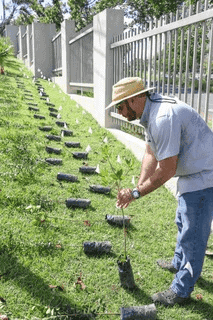
Hurricanes Irma and Maria devastated hundreds of acres of forest in Puerto Rico in 2017. In the past, Puerto Rico was deforested to make way for agriculture and urban development. When intensive agriculture declined, the island began to reforest naturally. The same has happened after the recent hurricanes, but we can accelerate the process by planting more trees.
Steps for a successful reforestation process
- Confirm that the soil type, temperature, and humidity are suitable for the plants and trees to be planted.
- Plant those plants and trees appropriate for the place.
- Select the most suitable planting technique for the species and the location.
- Take care of the crops —especially at the beginning— when they need the most water and fertilizer.
- Give them continuous maintenance.
Why are forests important?
- They cool the city and improve air quality, as they act as filters.
- They oxygenate the atmosphere, while also reducing greenhouse gases.
- They improve water quality because they filter out contaminants carried by runoff.
- They add aesthetic value to the environment.
- They are habitats for birds and other species.
- They reduce noise.
Services that a tree offers us
- A mature tree provides the oxygen needed by two people each day.
- It cools a room as well as 10 air conditioners turned on for 20 hours.
- It transfers 100 gallons of water daily from the soil to the atmosphere, generating rain.
What is the objective of reforestation in the estuary?
To restore the mangroves that once existed in Condado Lagoon and San Juan Bay. To do this, ESTUARY It uses innovative mangrove planting techniques that have been recognized and used in Puerto Rico and abroad.
Mangroves are natural barriers that protect us from waves and storm surges caused by cold fronts, storms, and hurricanes. Mangroves help prevent coastal erosion because their roots trap sediment, thus helping to create new shorelines. Furthermore, the submerged roots of the red mangrove are a nursery for the sea. In fact, more than 80% of marine species spend their juvenile stages there, finding food and protection.
What problems does reforestation face?
The main challenges of reforestation are achieving long-term maintenance of the plantings and protecting them against vandalism.
Coastal planting
ESTUARY Sow Spartina or saltgrass to restore and create sand dunes on beaches.
Benefits of protecting green areas and improving runoff management
- It improves the water and air quality of the basin.
- We can enjoy more recreational spaces.
- We make better use of the land by improving soil structure to support infiltration processes.
- Mitigate flooding (support natural flood control systems such as wetlands, bodies of water and dune systems).
- It reduces erosion and sedimentation processes in bodies of water.
- Protect, restore and increase habitats for wildlife.
- It reduces sewer overflow events.
- It helps lower energy costs, as urban groves reduce the temperature in their surroundings.
- It provides accessible urban greenways for pedestrians and cyclists.
- It reduces the heat island effect (excessive heating in built-up areas).
- It provides attractive green roofs and urban landscapes that improve the livability of the city.