
County Lagoon Artificial Reef Project
Did you see the following image when visiting County Lagoon?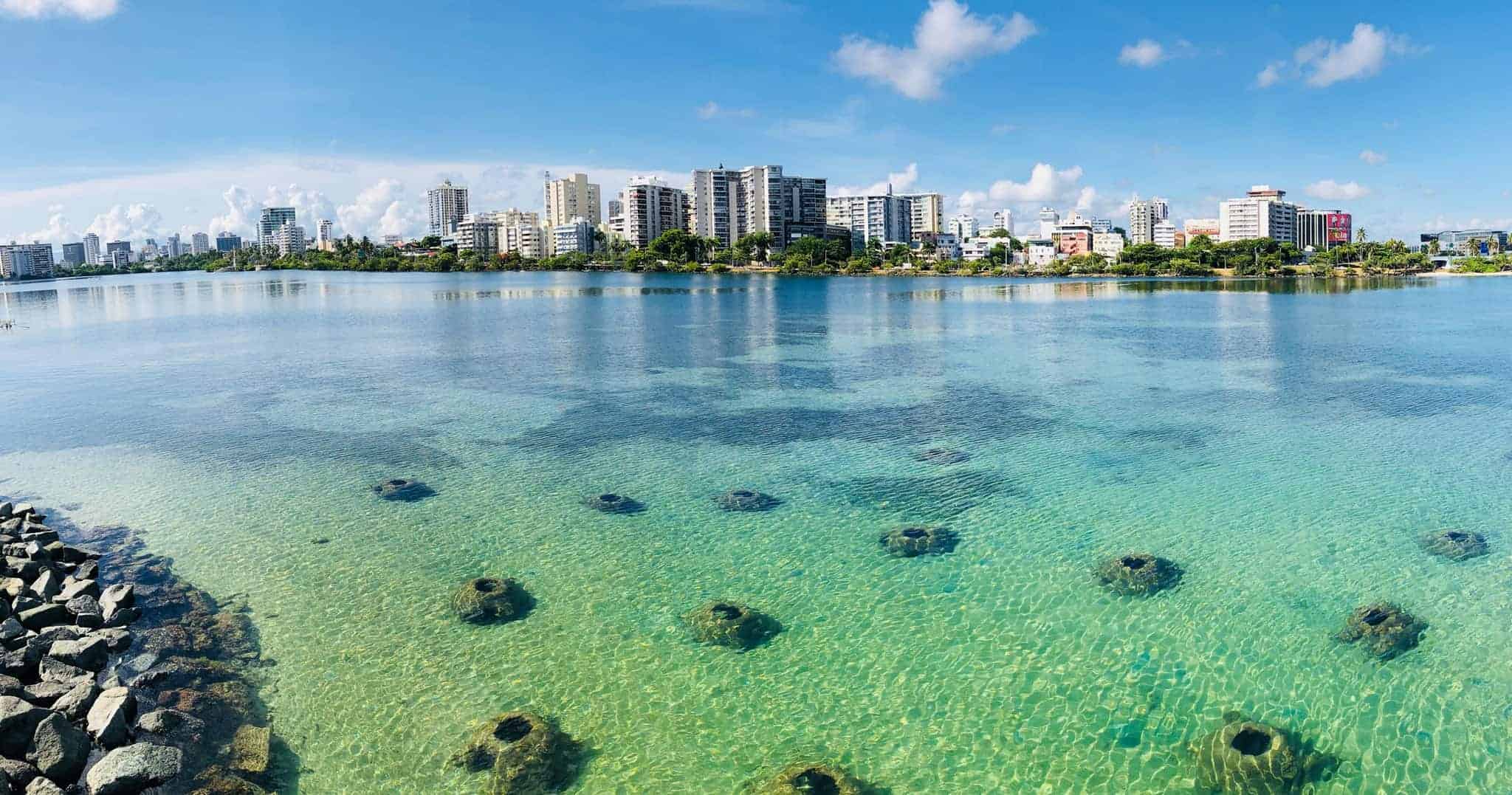
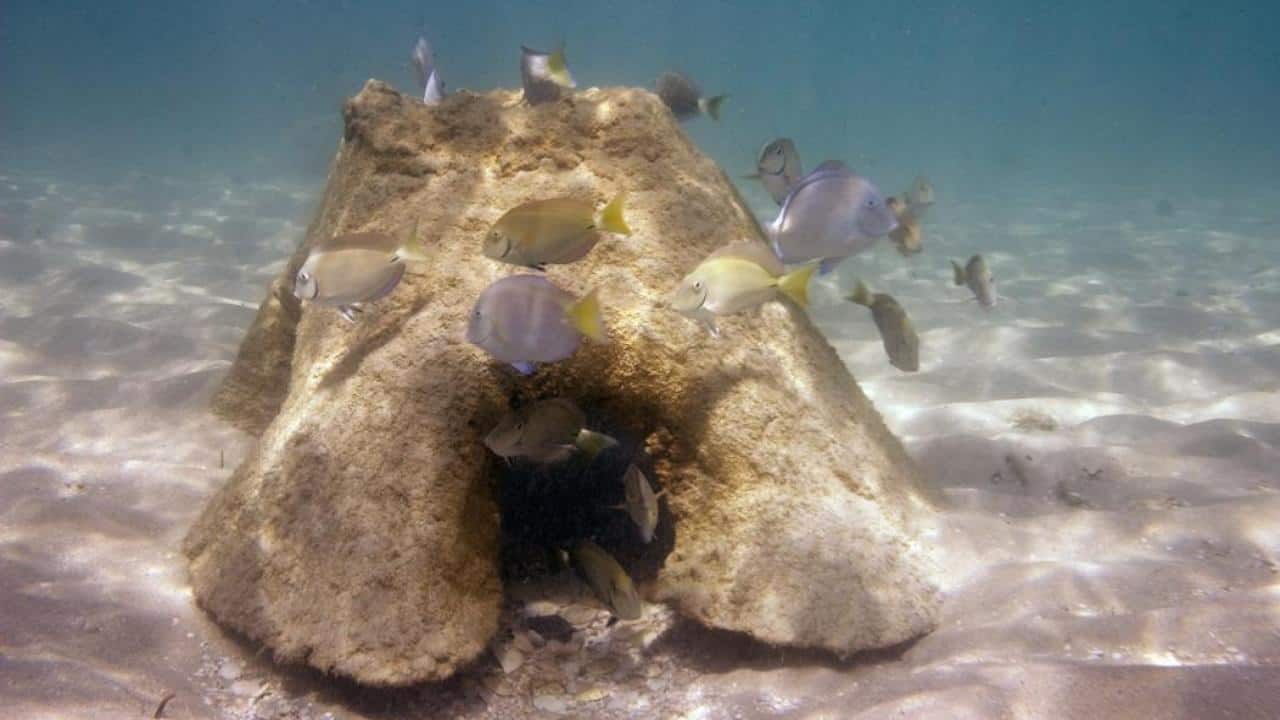
Coral communities and their associated habitats are found primarily at the sea entrances of San Juan Bay and Condado Lagoon. The latter is the lagoon with the greatest aquatic biodiversity in the estuary system.
To improve aquatic communities, the San Juan Bay Estuary installed 45 artificial reef modules on the floor of Condado Lagoon. These modules, known as “Taíno Reefs,” mimic the structures of coral reefs to create new habitats on the seafloor. Each module contains multiple fish entrances.
On the other hand, the outer surface provides a substrate for coral growth. Once installed, the ecological response is remarkable. For example, after nine months, the number and diversity of fish increased. This was confirmed by 176 individuals distributed among 35 species that were not present before the artificial reefs. Furthermore, an entire community was observed interacting; fish feeding on the algae growing on the surface of the modules and others taking refuge within them. Predators—such as jack mackerel and barracuda—were also observed capturing their prey. After six months, the first growing coral colonies were observed. Currently, more than 1,200 coral colonies are growing on these structures.
The core purpose of this project was to create habitats to increase marine biodiversity and stimulate coral growth. This type of project is known as blue infrastructure. Furthermore, these artificial reefs form an underwater interpretive walkway. With the appropriate equipment, people can observe fish, corals, and other marine species in their natural environment. This increases awareness and appreciation for the conservation of the marine world.
Today you can enjoy the underwater beauty and richness of the County Lagoon thanks, in large part, to its designation as an Estuarine Nature Reserve and the efforts to restore coral reefs, red mangroves, monitor water quality, clean underwater, and public enjoyment projects such as the Estuary Cinema in the Lagoon.
We invite you to explore this interpretive trail and ask that you refrain from touching or standing on the modules to allow them to continue supporting aquatic life. We would appreciate it if you would spread the word and continue supporting the Estuary's restoration efforts.