Citizen Scientist Certification for High School Students
The San Juan Bay Estuary offers the Citizen Scientist Certification in Coastal Resilience to students in grades 9-12 from public and private schools. These activities may be certified as community service or Green Contact hours (as applicable).
Students will participate in the Coastal Resilience module, where they will receive basic training to participate in environmental and ecological monitoring projects in mangrove, seagrass, and coral reef communities, and to support adaptation processes. This will enable them to implement more restoration projects in coastal ecosystems, manage scientific data, and strengthen coastal communities.
Offers:
Workshops on coastal ecosystems and socio-ecological resilience
Field experiences:
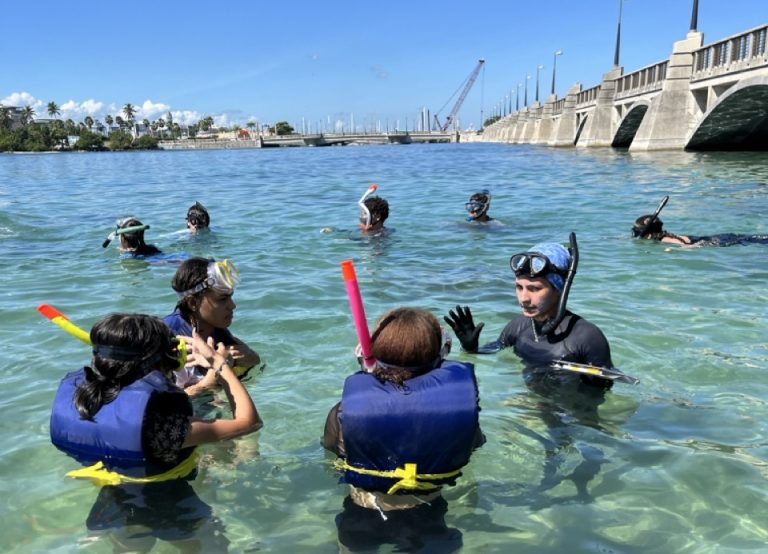
Ecological assessment of coral communities
Ecological assessment of seagrass communities
Ecological assessment of marine fish
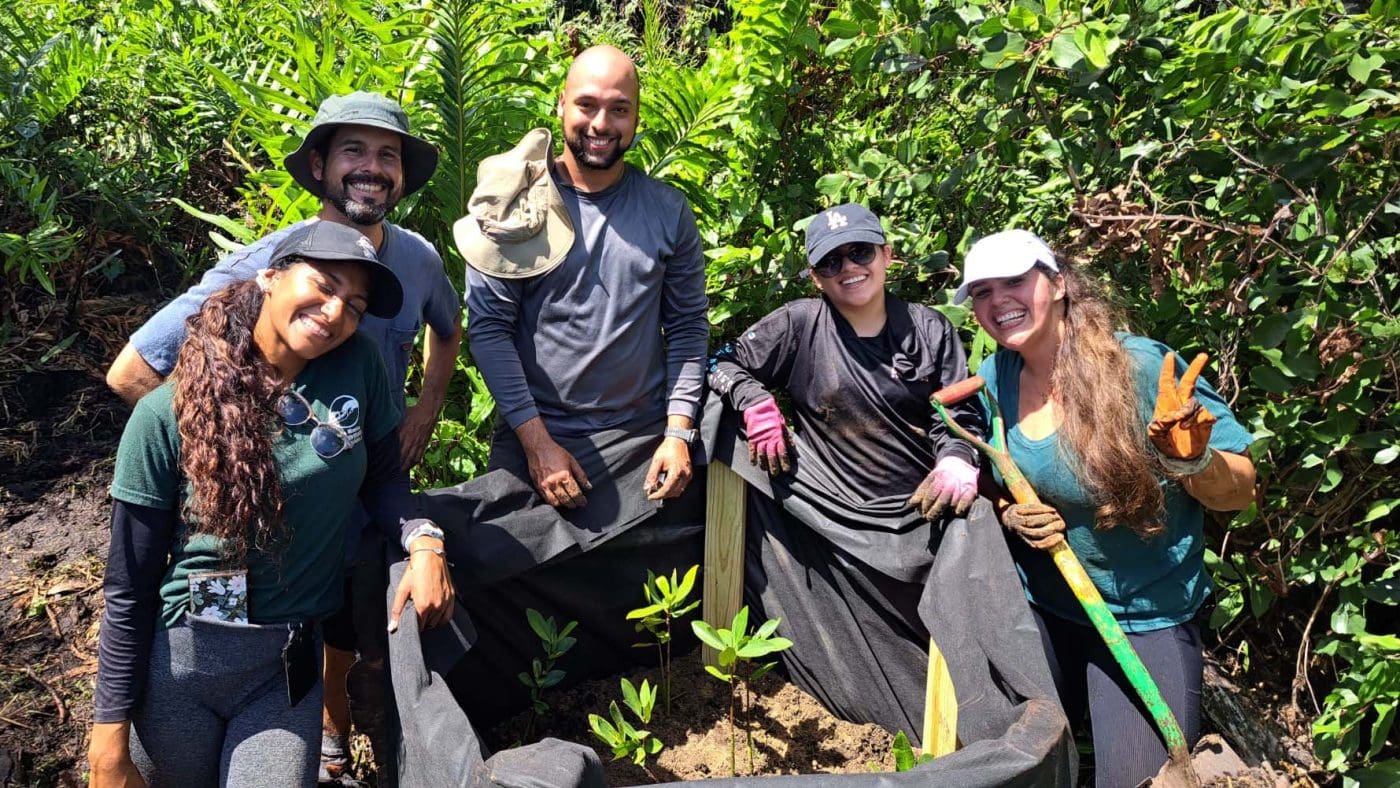
Ecological restoration with planting of coastal vegetation
Benefits:
Scientific knowledge and skills to contribute to ecological restoration
Tools for their development as environmental leaders
Contribution to the resilience of coastal ecosystems
Community service hours or Green Contact (as applicable)
A useful certification for professional development
Certification requirements:
1 introductory workshop
1 thematic workshop, according to habitat of interest
Coastal vegetation and dunes
Sea herbs
Coral reefs
Marine fish
2 field or research experiences
To participate in field activities, it is a requirement to attend the thematic workshop on the topic of interest. Young people must always be accompanied by an adult.
It presents concepts focused on tropical coastal ecosystems in order to study the services they provide and their roles in socio-ecological resilience.
Introductory workshop: Coastal Resilience
Thematic workshop based on the chosen theme/ecosystem:
Coastal restoration of dunes and mangroves
Ecological assessment of coral reefs
Ecological assessment of seagrasses
Ecological assessment of marine fish
Fieldwork: 2 fieldwork projects depending on the chosen theme/ecosystem.